For Those Who Live to Yearn
Legacies of World Verse with Contemporary Relevance.
Vital Exchange with Elder Explorers of This World, Who Lived to Sing About It— For Us.
Discover. Be Inspired. Learn. Thrive.
Explore the Vast Legacy of World Poetry and its Lore.
Develop a Personal Relevance to Ancient Poetic Traditions.

Poetry rewards slowness in an economy that punishes it. A poem by Emily Dickinson can be read in ninety seconds and unpacked for ninety years. While this might seem like inefficiency, it is a different kind of efficiency altogether, one measured in meaning compounded across return readings.
What the Independent Learner Finds Here
Elore is a place for people who teach themselves things. Not out of institutional requirement, but out of a hunger that will not be satisfied along any other path than lifelomg learning. If you are reading these words, I suspect you know something of that hunger yourself. Poetry resources are presented through Elore because Poetry offers the independent learner certain benefits that almost nothing else quite delivers.
Poetry rewards slowness in an economy that punishes it. A poem by Emily Dickinson can be read in ninety seconds and unpacked for ninety years. While this might seem like inefficiency, it is a different kind of efficiency altogether, one measured in meaning compounded across return readings. The independent learner, freed from a syllabus, can afford to read a fourteen-line sonnet a dozen times across a decade and discover something new with each encounter. Try that with a listicle.
Poetry trains your attention like a muscle. Contemporary media, streaming and otherwise, is often engineered to hold your attention against your will. Mesmerized in this way, you are merely a passive vessel for content reception designed by people who have studied your dopamine responses more carefully than you have studied yourself. Poetry does the opposite. It requires you to lean in with focus. The poem asks something of you that the algorithm never does: your active participation in the craft-work of meaning.
Poetry offers a form of lore that is owned by no institution. You do not need a university seat to read Rumi at 2 a.m. when the house is silent and something in your chest is asking questions you cannot name. You do not need permission to memorize Mary Oliver's “Wild Geese” and carry it, the way the old bards carried their versing formulas, ready to be rebuilt in your own voice whenever you need it. This is knowledge that cannot be repossessed. Once a poem lives inside you, truly inside you, in the rhythm of your own remembering, no one can take it back.
Poetry teaches, better than almost any other art, the discipline of compression. We are all struggling to stay afloat through an era drowning in verbosity. This is an age where everyone, assisted by machines, generates paragraph after paragraph of text with tireless ease. Poetry operates within a significantly different discipline. Say the most with the least. Basho's frogs leaping into ancient ponds. Sappho's fragments, half-eaten by time, somehow more devastating for what has been lost, convey more than any essay ever could. The independent learner who studies poetry is developing a rare and increasingly valuable skill: the ability to say a true thing precisely, and then, crucially, to stop talking.
We shall not cease from exploration
And the end of all our exploring
Will be to arrive where we started
And know the place for the first time.
—T.S. Eliot
Site Description and Featured Content
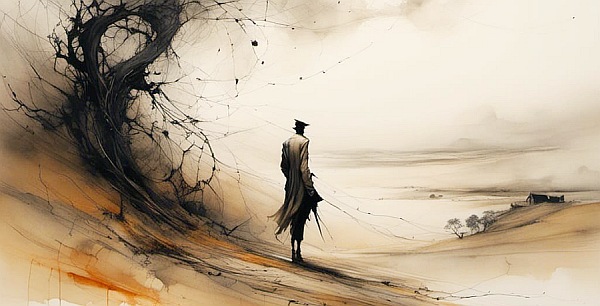
The Contemporary Relevance of World Poetry
The well that has never run dry; where the boundary between what is ancient and what is present dissolves within your senses.
Read Editorial ›Featured Resources
- The Vocabulary of Poetic Forms
- How to Recite a Poem Like Your Ancestors, or: Slow Reading in a Fast Age
- The Yearning Ear: Teach Yourself Poetry Without a Classroom
- Poems That Outlived Empires: The Most Durable Human Artifacts
- Poetry as Medicine: An Ancient Rhythmic Tradition
- Exercise: Memorizing One Poem, and What it Does to You
“No one lights a lamp in order to hide it. The purpose of light is to create more light, to open people's eyes, to reveal the marvels all around us.”
The Origin Story of Poetry
Before there was language, there was rhythm. Before there were readers, there were listeners. Before there was writing, there was literature. At the dawn of all cultural expression, we find a form of poetry.
Somewhere upon the hillsides of Ionia, or in the smoky longhouses of the cold North, or beneath the baobabs where griots kept their nations' names and lore alive, someone made a discovery. They discovered that if you gave language a rhythmic form and infused that form with feeling, it would sail like a vessel across time. That is the origin story of poetry. It is a story older than any written record, and it is the reason we are still passionately involved with verse composition at a moment when machines generate sonnets in the time it takes you to read this sentence.
The discussions at Elore revolve around the reasons why that ember has never quite gone out, and why, curiously, it seems to be flaring up again in an age saturated with synthetic language. In this strange time of ours, we have been discussing Homer at length, as Christopher Nolan's The Odyssey, fills theaters throughout the world. A 3,000 year old poem as 'cinematic blockbuster' makes for sporty conversation around here.
We also talk often about what independent learners actually gain from wrestling with a stanza, and about how to learn this old craft properly. We do not reject the advances of the present, for poetry has long-proved resilient enough to survive this hour. You might consider what we do here as a walk along the shoreline where oral tradition meets and chats with the algorithm; two very different technologies, each trying to solve the same ancient problem: how do you make something worth remembering.
Quoting Lore
“I beg you, to have patience with everything unresolved in your heart and to try to love the questions themselves as if they were locked rooms or books written in a foreign language. Don’t search for the answers, which could not be given to you now, because you would not be able to live them. And the point is to live everything. Live the questions now. Perhaps then, someday far in the future, you will gradually, without even noticing it, live your way into the answer.”
“A poem begins as a lump in the throat, a sense of wrong, a homesickness, a lovesickness.”
The Loneliness of Poets
There is a thing I have never been able to explain to people who do not already know it, and to people who do know it, no explanation is necessary, which is reliably how you tell who your true companions are.
It is this: that a man dead a thousand years can be more present to you at certain midnights than the neighbor sharing your apartment wall.
Li Bai, drunk under the Tang dynasty moon, reaching, the legend says, to embrace the moon's reflection in the river, and drowning, or so they tell it, which is almost certainly not true and is therefore exactly true, because it is the truest thing about him: that he would reach for a beautiful reflection and go under for it, gladly.
I have met him at more rivers than I could count. He is always there before me, already three cups to the wind, patting the ground beside him, saying in that easy way of his: The moon does not know how to drink, and my shadow only follows me around saying nothing. Still, let us three make merry while the spring lasts.
Three of them: the poet, the moon, his shadow. And now four, because I have pulled up a stone and sat down at the edge of his loneliness and found it, somehow, the least lonely place in the world.
That is the secret they do not print on the covers of the anthologies. The loneliness of poets is a communal loneliness. It is a fire around which the solitary gather, each of us alone, and all of us together, warming our hands.
Quoting Lore
“If I read a book and it makes my whole body so cold no fire can warm me, I know that is poetry. If I feel physically as if the top of my head were taken off, I know that is poetry. These are the only ways I know it. Is there any other way?”
“A good poem is a contribution to reality. The world is never the same once a good poem has been added to it. A good poem helps to change the shape of the universe, helps to extend everyone's knowledge of himself and the world around him.”
“There is nothing that can stop the creative. If life is full of joy, joy feeds the creative process. If life is full of grief, grief feeds the creative process. How immense can be the power of circumstance, the power of life's pull in generating original breakthroughs of mind and heart, spirit and matter.
“Tell me, what is it you plan to do with your one wild and precious life?”
Elore Resources for Learning

Elore is a comprehensive and engaging online platform presenting topics of cultural history and world lore for independent learners pursuing a self-directed education.
Through a diverse constellation of sites we provide a wide range of resources, including feature articles, tutorials, books, audio & video materials, webinars, courses and interactive projects. Our intention is to provide inspirational and thought nourishing content which inspires interest toward deeper study and fuller appreciation of the featured subject.
We offer freely accessible quality materials, personalized learning paths, and a supportive community of fellow learners. Visitors can easily browse and select from a variety of resources based on their interests and learning goals. We collaborate with topic specialists and educators to create and curate content that is engaging, informative and relevant to the times we are living through.
Whether a curious hobbyist or lifelong learner Elore provides a variety of ways to pursue your interests.
Elore Archives of Legacy Content
All that has been known, cared about, created and experienced comprises the collective lore of humanity. Across time much has been lost beyond recovery. What remains, however, are vast resources of the historical and cultural legacies left to us by our ancestors.
The technological tools of the digital era allow us to access legacy resources with greater ease than at any other time in history. The sheer volume of material available, however, makes the task of research and study daunting — at times overwhelming.
A primary directive of Elore is to provide avenues of access to the vast legacies of collective lore in a manner which supports individual study and exploration. Throughout the Elore environment curious explorers can set sail on journeys of learning accompanied by travelers who have crossed these paths for many centuries and bestowed to us the heritage of their life experience and understanding.
“Sing to me of the man, Muse, the man of twists and turns.”
—Homer, The Odyssey, translated by Robert Fagles
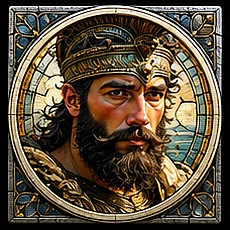
The tale is old, yet these are not solely ancient human experiences. Odysseus faces life challenges you have lived, whether you fought in a war or simply moved away from the beloved town where you grew up and returned years later to find yourself a complete stranger.
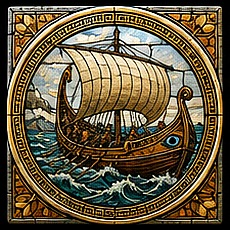
Why Odysseus Keeps Coming Home
The Enduring Significance of a 3,000 Year Old Poem.
We are a tribe of curious minds here at Elore. One of the most curious series of discussions going on here this year revolves around Christopher Nolan's film adaptation of The Odyssey. With a cast including Matt Damon as the wandering hero and an ensemble built for spectacle, this film has been filling millions of theater seats throughout the world. What's curious, for us, is observing this fact from a contemporary perspective. In an entertainment landscape saturated with stories built from comic books, and video games, one of the most successful film productions in decades is an adaptation of a poem written down somewhere around 2,800 years ago.
Nolan is hardly the first to be drawn into the undertow of Homer's ancient epic. Yet, it's ongoing resurgence invites the question: why does this tale continue inspiring creative minds century after century?
Within our curious discussions we talk of how the Odyssey is far more than a tale about a man in a boat. The story of Odysseus is about the peculiar ache of displacement, and the harder, stranger ache of return. There is the fear that home will not recognize you, that you will not recognize home, that the person who left is not the person who comes back. The tale is old, yet these are not solely ancient human experiences. Odysseus faces life challenges you have lived, whether you fought in a war or simply moved away from the beloved town where you grew up and returned years later to find yourself a complete stranger.
Poetry, at its oldest and most durable, often gives shape to experiences that resist standard forms of prose because those experiences are not linear. Grief loops. Longing circles back on itself. Homecoming is never a straight line. Epic verse wanders like a king from Ithaca. This style of storytelling reflects the actual thought patterns of the human mind far better than the tidy arc of a screenplay ever could.
Nolan's film, wherever its own odyssey takes it from here, is curious to us largely as evidence. Evidence provided by the attention of millions of filmgoers that the old poem still has enough gravitational pull to rescue an entire industry from disinterest. Curious indeed, three thousand years after its last singers filled the air along the coasts of old Greece with tales of the man of twists and turns.
Join a Global Community of Curious Minds
To receive updates and invitations as new features premiere, send us a request through the link below.
“We make out of the quarrel with others, rhetoric, but out of the quarrel with ourselves, poetry.”
“There is not a particle of life which does not bear poetry within it.”
About Elore
Are you the kind of person who reads deeply rather than skims? Do you follow a fascinating tangent down its rabbit hole rather than retreating to a safer, more convenient path? Do you suspect that ancient stories still have something relevant to teach us about being human in the age of AI? If these questions resonate as true, then Elore was built for you, quite literally, across more than thirty years of devoted labor.
Elore is a place for people who teach themselves things: the self-directed learner and independent thinker who treats their own education as an unfinished, lifelong project. Our resources are intended for people who are tired of data and hungry for substance, people who sense that the search & scroll option has left them well-informed but poorly nourished.
When you immerse yourself in legacy lore, you gain access to something deeply nourishing.
 Lore is a distributed wisdom, accumulated by the creative foundry of collective human culture itself. Lore
functions as a process of meaning-craft, performing an evolutionary natural selection as it carries knowledge
forward. Stories that survive across time are not necessarily the most historically accurate or the most
sophisticated. The tales that get passed on are the ones that convey something so essential about the human
experience that people feel compelled to keep telling them, generation after generation.
Lore is a distributed wisdom, accumulated by the creative foundry of collective human culture itself. Lore
functions as a process of meaning-craft, performing an evolutionary natural selection as it carries knowledge
forward. Stories that survive across time are not necessarily the most historically accurate or the most
sophisticated. The tales that get passed on are the ones that convey something so essential about the human
experience that people feel compelled to keep telling them, generation after generation.
Elore exists as an ark of sorts, dedicating a space in which to freely explore these legacies. Our intention is to make available knowledge which remains genuinely useful from the world's vast cultural inheritance. At its heart, Elore is a harbor for curious minds navigating the complexity of our times.
Learn More ›
“Poetry is just the evidence of life. If your life is burning well, poetry is just the ash.”
“The purpose of poetry is to remind us how difficult it is to remain just one person, for our house is open, there are no keys in the doors, and invisible guests come in and out at will.”